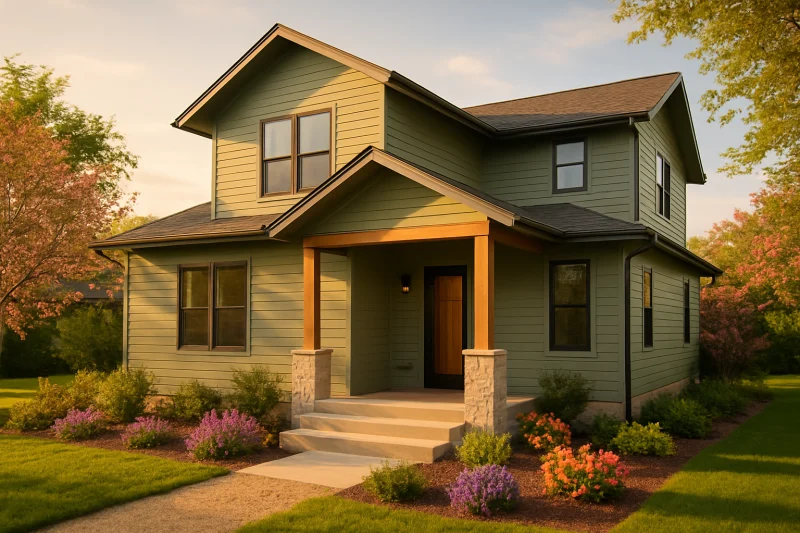
Saving enough for a down payment and closing costs can make purchasing a Dallas-Fort Worth…
Down Payment Assistance: A Guide for DFW Buyers
By Douglas Bateman, Divisional President | NMLS# 255171
Buying a home in Dallas-Fort Worth can feel out of reach when the down payment and closing costs compete with your savings goals. Down payment assistance provides eligible buyers with grants or secondary financing that can reduce the cash needed to purchase a primary residence. In this guide, we at The Mortgage Edge (NMLS# 35960) explain how assistance programs work, who may qualify, and what DFW buyers should consider before applying.
Key Takeaways
- Purpose: Down payment assistance can help eligible buyers cover part of a down payment, closing costs, or both.
- Eligibility: Programs commonly consider income, credit, debt, property location, occupancy, and homebuyer education.
- Program Structure: Assistance may be a grant, forgivable second mortgage, deferred loan, or repayable second mortgage.
- Timeline: Buyers should review programs before making an offer because approval and property requirements can affect the closing schedule.
- Best For: Assistance may help qualified first-time or repeat buyers who can manage a mortgage payment but need help with upfront costs.
Quick Answers About Down Payment Assistance
- Is assistance only for first-time homebuyers? No. Some programs are limited to first-time buyers, while others allow eligible repeat buyers. A program may define a first-time buyer as someone who has not owned a principal residence during a specified lookback period.
- Can assistance pay closing costs? Often, yes. Depending on the program, funds may be applied to the down payment, eligible closing costs, or prepaid expenses.
- Does assistance mean a buyer needs no cash? Not necessarily. Buyers may still need money for an earnest money deposit, inspection, appraisal, reserves, or costs that the program does not cover.
- Can assistance be paired with FHA, VA, or conventional financing? Often, but the assistance program and first mortgage must be compatible. Program rules and lender overlays vary.
How Does Down Payment Assistance Work?
Down payment assistance, commonly called DPA, is funding provided alongside a buyer’s primary mortgage to reduce eligible upfront homebuying expenses. The assistance does not replace the first mortgage. Instead, it supplements financing from an approved lender.
Many programs are offered through state housing agencies, housing finance organizations, cities, counties, or participating lenders. The buyer generally must qualify for both the primary mortgage and the assistance program.
For example, a buyer might use an FHA, VA, or conventional mortgage as the first loan. An approved assistance program could then contribute toward the required down payment or eligible closing expenses. The exact amount and permitted uses depend on current guidelines.
What Types of Down Payment Assistance Are Available?
The word “assistance” does not always mean free money. Buyers should understand how the funds are structured and what may trigger repayment.
| Assistance Type | How It Generally Works | Important Consideration |
|---|---|---|
| Grant | Funds generally do not require monthly repayment when all program conditions are satisfied. | Eligibility, property, and occupancy restrictions may apply. |
| Forgivable second mortgage | The balance may be forgiven over time if the buyer follows the program’s requirements. | Selling, refinancing, or moving too soon may trigger repayment. |
| Deferred second mortgage | Monthly payments may be postponed until a future event, such as a sale or refinance. | The balance generally remains attached to the property until repaid or otherwise resolved. |
| Repayable second mortgage | The buyer makes payments in addition to the primary mortgage payment. | The payment may be included when calculating debt-to-income ratios. |
Before choosing a program, ask whether the assistance creates a lien, carries interest, requires monthly payments, or must be repaid after a sale, refinance, payoff, or change in occupancy.
Who May Qualify for DFW Down Payment Assistance?
Requirements vary among programs, but most evaluate several core factors.
Household Income
Many programs establish income limits based on household size, property location, or a percentage of the area median income. Some count only borrower income, while others may consider income from additional household members.
Income limits can differ across Dallas, Fort Worth, and surrounding Metroplex communities. Buyers should confirm which income calculation applies instead of assuming that every program uses the same method.
Credit and Debt Obligations
Assistance programs commonly have minimum credit standards and maximum debt-to-income guidelines. The first-mortgage lender may also have requirements beyond those established by the assistance provider.
Meeting an assistance program’s basic eligibility rules does not by itself establish mortgage approval. Income stability, credit history, assets, property eligibility, and other underwriting factors still matter.
Primary-Residence Occupancy
Most homebuyer assistance programs require the property to become the borrower’s primary residence. Second homes and investment properties are generally not eligible for owner-occupant DPA programs.
Homebuyer Education
A homebuyer education course is commonly required. The course may cover budgeting, mortgage terms, property maintenance, insurance, and the responsibilities of homeownership. Buyers should use a course accepted by the specific assistance program.
Property and Purchase-Price Rules
Programs may limit eligible property types, purchase prices, or geographic areas. A home may also need to satisfy appraisal, condition, or inspection standards. Condominiums, manufactured homes, and multi-unit properties can be subject to additional rules.
Where Can DFW Buyers Find Assistance Programs?
Dallas-Fort Worth buyers may encounter programs administered at several levels:
- Statewide programs: Texas housing organizations may offer assistance through approved participating lenders.
- City and county programs: Municipal or county housing departments may offer funding within defined boundaries.
- Lender-supported programs: Certain lenders may participate in assistance initiatives or offer eligible low-down-payment financing.
- Community programs: Nonprofit housing organizations may provide education or financial assistance when funding is available.
Availability can change when funding is allocated, reserved, or exhausted. A program offered in Dallas may not apply to a property in Fort Worth, Arlington, Plano, Frisco, Denton, or another Metroplex community. The property address should be checked against current geographic requirements.
Buyers in Houston, San Antonio, and Lubbock may also have access to statewide or local options, but the applicable limits and program administrators can differ.
How DPA Works With FHA, VA, and Conventional Loans
Assistance is usually paired with an approved first mortgage. The right combination depends on eligibility, property details, available funds, and the buyer’s long-term plans.
| First Mortgage | General Structure | DPA Consideration |
|---|---|---|
| FHA | Allows a well-established minimum down payment of 3.5% for eligible borrowers and includes mortgage insurance. | Approved assistance may help with the required investment or eligible costs. |
| Conventional | Some eligible programs allow as little as 3% down, subject to current guidelines. | Income limits, mortgage insurance, and assistance compatibility should be reviewed. |
| VA | Eligible veterans, service members, and qualifying surviving spouses may obtain 0% down financing. | Assistance may still be useful for allowable closing costs, depending on program rules. |
Buyers can review our overview of low down payment purchase options and learn more about how an FHA home loan is structured. Because not every assistance program works with every mortgage, the pairing should be verified before a buyer relies on the funds.
What Are the Tradeoffs of Using Assistance?
DPA can make a purchase more manageable, but buyers should compare the immediate benefit with the long-term cost and restrictions.
Potential Benefits
- Reduces the amount of cash needed at closing.
- May allow buyers to preserve some savings for moving expenses, repairs, or reserves.
- Can supplement FHA, conventional, or eligible VA financing.
- May help a qualified buyer purchase sooner than saving the full amount independently.
Potential Tradeoffs
- The first mortgage may have different pricing than financing without assistance.
- A second lien may limit or complicate a future refinance.
- Repayment may be required after selling, refinancing, paying off the first mortgage, or changing occupancy.
- Income, purchase-price, and geographic limits can narrow the available choices.
- Additional documentation or approval steps may affect the closing timeline.
DPA should be evaluated as part of the entire financing package, not only by the amount offered. Compare the interest rate, monthly payment, mortgage insurance, assistance repayment terms, closing costs, and expected time in the home.
Steps to Apply for Down Payment Assistance
- Start with a complete financial review. Gather income records, asset statements, identification, housing history, and information about current debts.
- Obtain mortgage pre-approval planning. Review the first-mortgage options for which you may qualify before selecting an assistance program.
- Identify programs that match the property area. Confirm whether the program applies to the city, county, or census area where you plan to purchase.
- Compare the assistance terms. Ask whether the funds are granted, forgiven, deferred, or repaid monthly.
- Complete required education. Use an approved course and retain the completion certificate.
- Coordinate before making an offer. Your real estate professional and lender should understand any program-specific contract or closing requirements.
- Verify the final terms before closing. Review the first mortgage and assistance documents, including repayment triggers and occupancy obligations.
Self-employed borrowers may need additional time to document qualifying income. Tax returns, business records, year-to-date financial statements, or other documentation may be requested depending on the loan program. A borrower exploring alternative documentation can also review the bank statement program, although not every nontraditional mortgage is compatible with DPA.
Plan Before You Shop
Down payment assistance can be valuable, but it is not automatically the least expensive choice. In some situations, using personal funds with a different first-mortgage structure may produce a better long-term fit. In others, assistance may preserve savings and make the upfront costs more manageable.
As of 2026, program funding, rates, fees, income limits, and underwriting requirements can change. Buyers should verify current information with a licensed mortgage professional and avoid relying on an outdated program summary.
We invite you to call, text, or email us to review your scenario, compare available mortgage and assistance options, and understand the next steps. Starting with pre-approval planning can help identify potential documentation issues before you enter a purchase contract.
Frequently Asked Questions
What happens to down payment assistance if I sell or refinance?
The outcome depends on the assistance agreement. A sale or refinance may require repayment of some or all of the balance, while a forgivable program may reduce the amount owed over time if its conditions are satisfied.
Can a self-employed borrower qualify for down payment assistance?
A self-employed borrower may qualify if the borrower meets the assistance and first-mortgage requirements. The lender will typically review documented qualifying income, business history, credit, assets, and other underwriting factors.
Are condominiums or multi-unit properties eligible for assistance?
Some programs permit these property types, but additional restrictions may apply. The property, project, occupancy plan, appraisal, and first-mortgage program must all satisfy current guidelines.
How long does down payment assistance approval take?
Timing varies by program, lender, documentation, funding availability, and property review. Buyers should begin early and allow time for homebuyer education, program reservations, and any additional approval steps.
Does using assistance affect a purchase offer or closing?
It may add documentation, funding, or timing requirements that should be reflected in the transaction plan. Clear coordination among the buyer, lender, real estate professionals, and assistance administrator can help everyone understand the applicable deadlines.
This is educational and not financial advice. Loan programs and guidelines can change. Talk with a licensed mortgage professional about your specific scenario.

About the Author
Douglas Bateman
Divisional President at The Mortgage Edge · NMLS #255171
Doug has helped thousands of families realize their dream of homeownership. With over 35 years of experience Doug can help on any issues that Friday whether it be for our Veterans, Self Employed, First Time Homebuyers, Professional Investors, and or credit challenged in a vastly superior and much more meaningful way to other lenders with less experience.
Specializes in: VA, FHA, Conventional
Licensed in: AR, OK, TX
Related Posts


